Class A campers are very nice. They are certainly easier to drive and park than a truck with a long trailer. The challenge for us was that we wanted to take our motorcycles on the road with us. When two large Harley's were brought into the mix, the options dropped quickly. The first key criteria was weight. No matter what type of rig we purchased, we had to have a diesel engine. Adding a Diesel vehicle further reduced our options and took out the most common Class A Toy Hauler the Thor. Thor RV's are popular, but they are gasoline only. They do not have the room or the payload to carry two Harley's in the back.
A second consideration for us was maintenance. A vehicle with more moving parts is going to require more maintenance. When I need an oil change in my Dully, I can take it to a dealer or quick oil change shop. I don't need to find a special facility that can accept a large vehicle. If my truck breaks down we can get our fifth wheel camper towed somewhere where we can wait out repairs in the comfort of our home on the road. Living at a truck repair shop isn't an option in most cases. That means that every time a Class A coach is in the shop the people need to find somewhere else to live.
The third reason is space. The 397TH is larger than our first apartment. It has two full bathrooms with showers, 4 televisions, and the garage can be turned into a guest suite or an office at a push of a button. A fifth wheel camper has more room than anything else.
We use the Ring Alarm system and cameras in our rig. We went with Ring because their service can be self monitored. Campers that move frequently cannot be professionally monitored. They would not know where to dispatch police or fire, which could lead to big fines.
I did a full overview video of the Ring Alarm system install. This video walks through everything we are using and how it works.
This is a great topic to discuss. Modern campers have a ton of sensitive electronics on board. I cannot even imagine the cost we could incur if we had a power surge through our rig. The answer is yes, most certainly we have surge suppression. We actually have several levels of surge and power protection on our coach.
If one were to walk by our rig at a campground it would look like we are directly plugged into power with no surge suppression whatsoever. We installed everything inside of the storage compartment behind the Nautilus Water bay. Keeping gear inside is a good idea. Expensive parts hanging outside on a power pole are open targets for theft. Even cable locks can be cut.
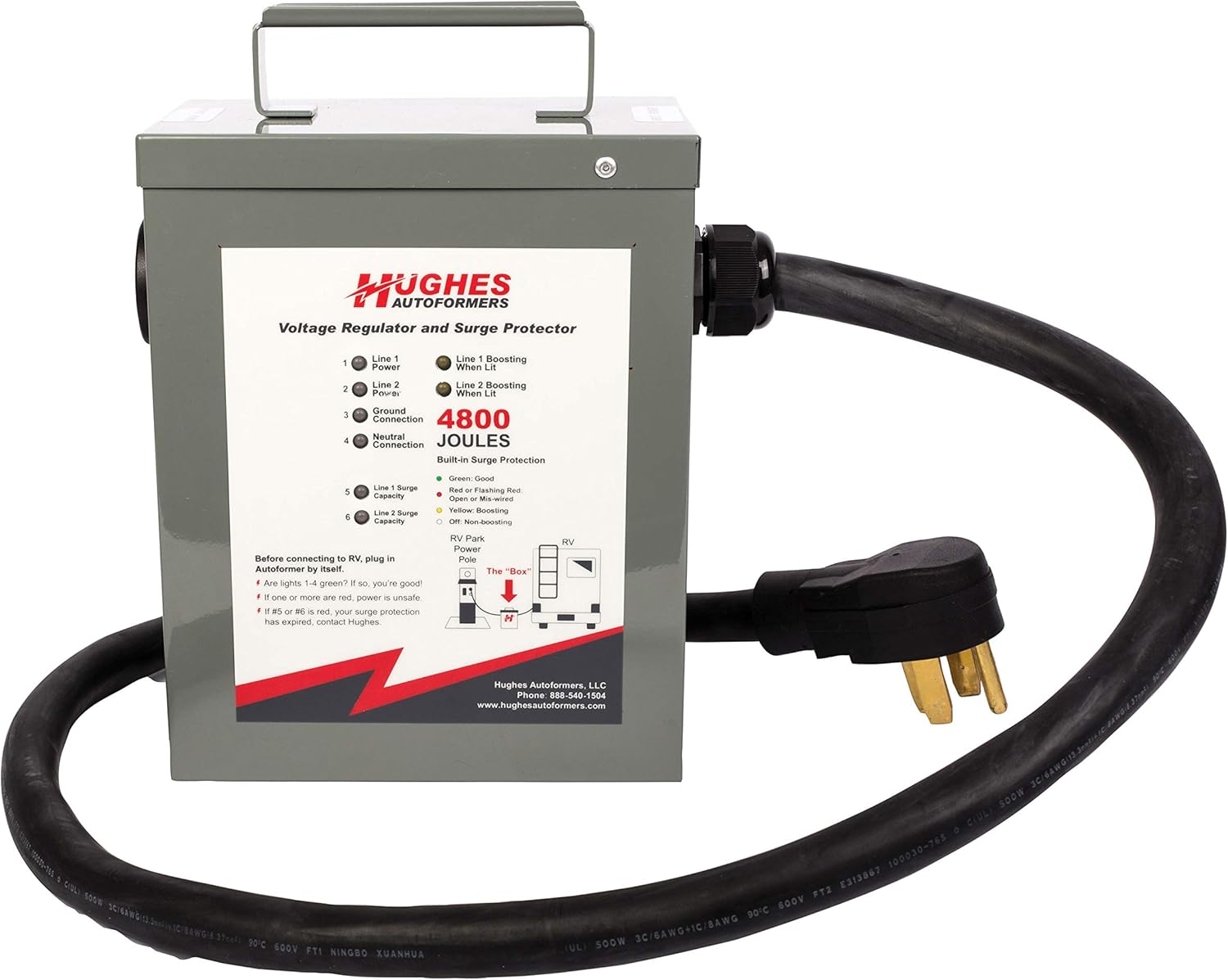
Our first line of defense is a 50 Amp Hughes Autoformer. The Autoformer is classified as a voltage booster with surge suppression. The device doesn't just monitor power like most systems, it actually interacts with the inbound power feed to bump up the voltage to a safe level that is around 120 VAC. The system has step up transformers inside of the unit that are designed to get the voltage to a safe level. If for any reason it cannot safely do so, the Autoformer will disconnect power. It is fully automatic and can bump either leg of the AC power source up by 10%. For example, one leg of power can be coming in as low as 108 VDC that would kill air conditioning compressors, computer power supplies, etc. and it will transparently step the voltage up to 119 VAC that is safe to use. The Autoformer also has a field replaceable surge protector that can safely dissipate 4800 Joules of power.
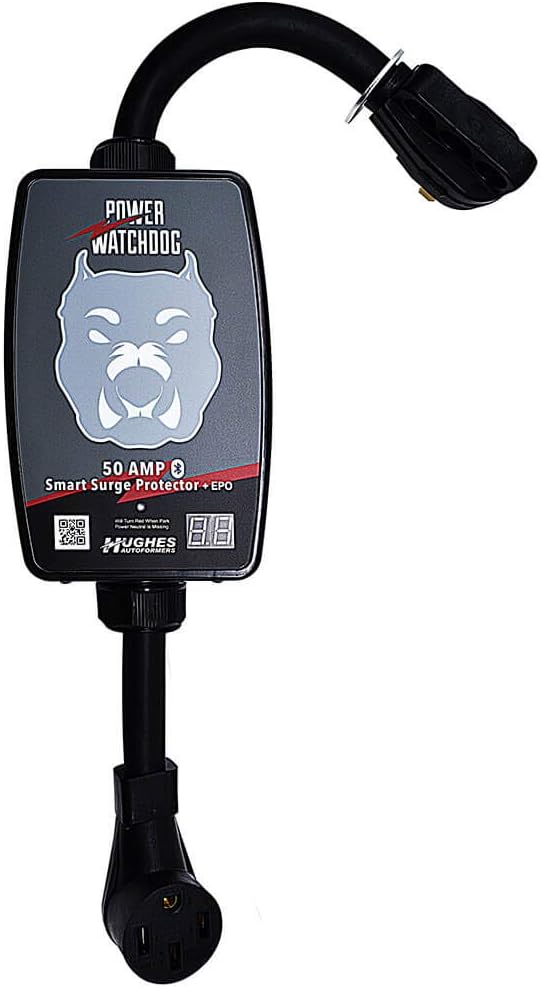
The second level of protection we use is also made by Hughes. It is called the Watchdog with Bluetooth, surge protection and Emergency Auto Shutoff (EPO). One of the items that really sets the Watchdog ahead of their competitors is the Bluetooth app. From the comfort of the couch I can see exactly what is going on with the power coming into our rig. It also has a cool watt counter that will track exactly how much power we have used. This is very helpful when trying to calculate how much power we need for solar and off-grid living. It is also useful when staying in parks that charge for power. It is nice being able to audit the bill. The watchdog also has a 4800 Joule field replaceable surge device like the Autoformer. Most of these types of devices are sealed and cannot be serviced in the field. Having a spare surge part can keep the rig running and protected.
The sharp eye reader may notice that I posted the picture of a standard unit that is not hard-wired in and recall that I said above that everything is wired inside of our coach. We chose to use plug-in devices so it would be easy to remove a device out of the system if we are experiencing problems. It is a major pain to crawl deep inside of the rig and un-wire heavy AC lines because a surge suppressor popped. The plugs make it easy to remove a device and fix it in the morning vs going all night without power.
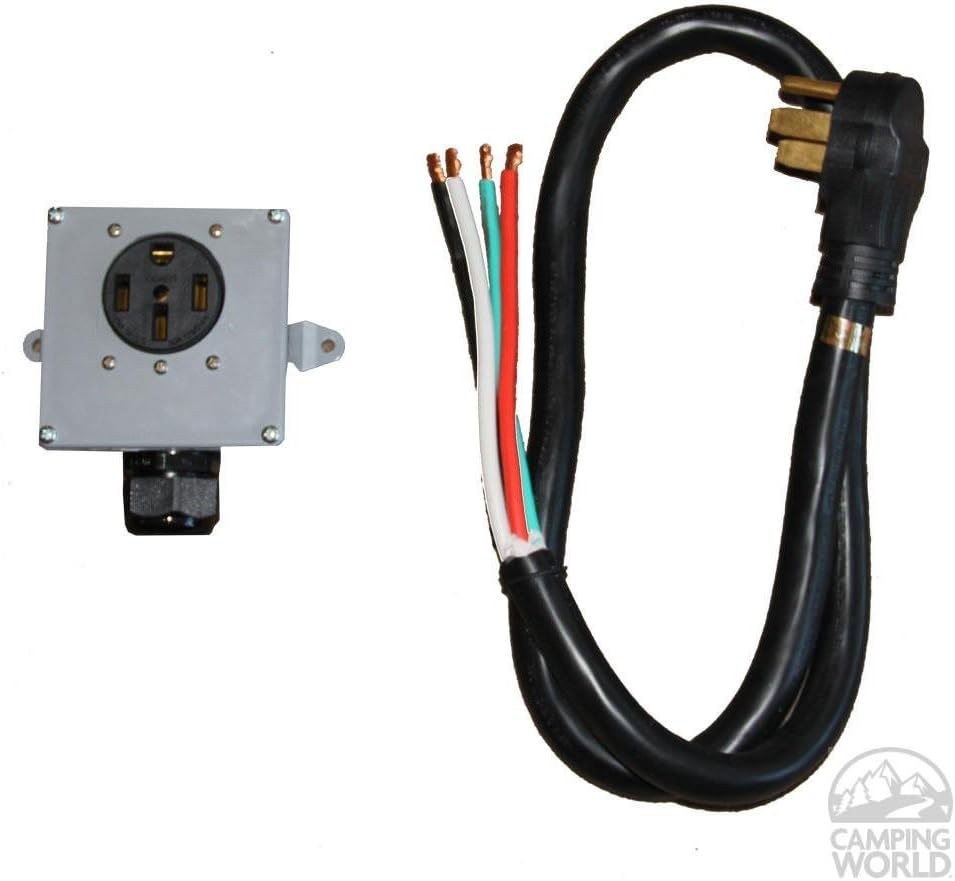
To accomplish the feat of having plug in units effectively hard-wired in we used one more part from Hughes called the hardware kit. It has a heavy duty 50 amp cable that wires into the transfer switch. And a 50 amp plug that is wired into the line coming in from the outside. When the two are plugged together is is exactly the same as OEM. Power follows the same path. However, when the two are joined by putting parts like the Autofomer in the middle that is where the magic happens. This is the link to the install kit.
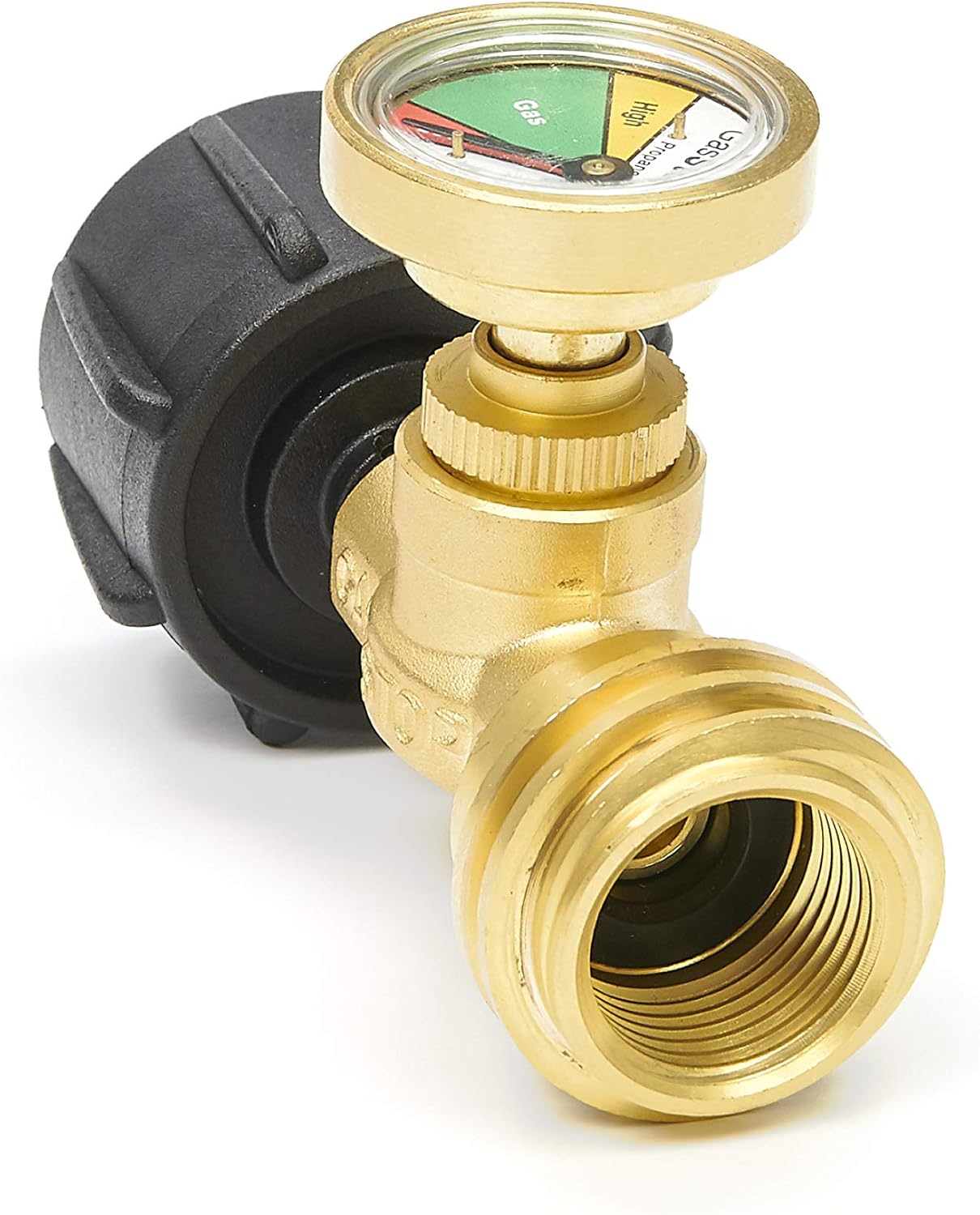
We use a combination of two different devices. The first one is a physical device that screws onto the tank valves. It has a pressure meter that reads the approximate state of charge. It also protects us from a rapid propane leak that could happen if a line comes lose or is cut. It is called a GasStop Emergency Shutoff Valve. The GasStop is a must have device. We are carrying 60 lbs across two tanks of Propane. A leak could create an explosion.
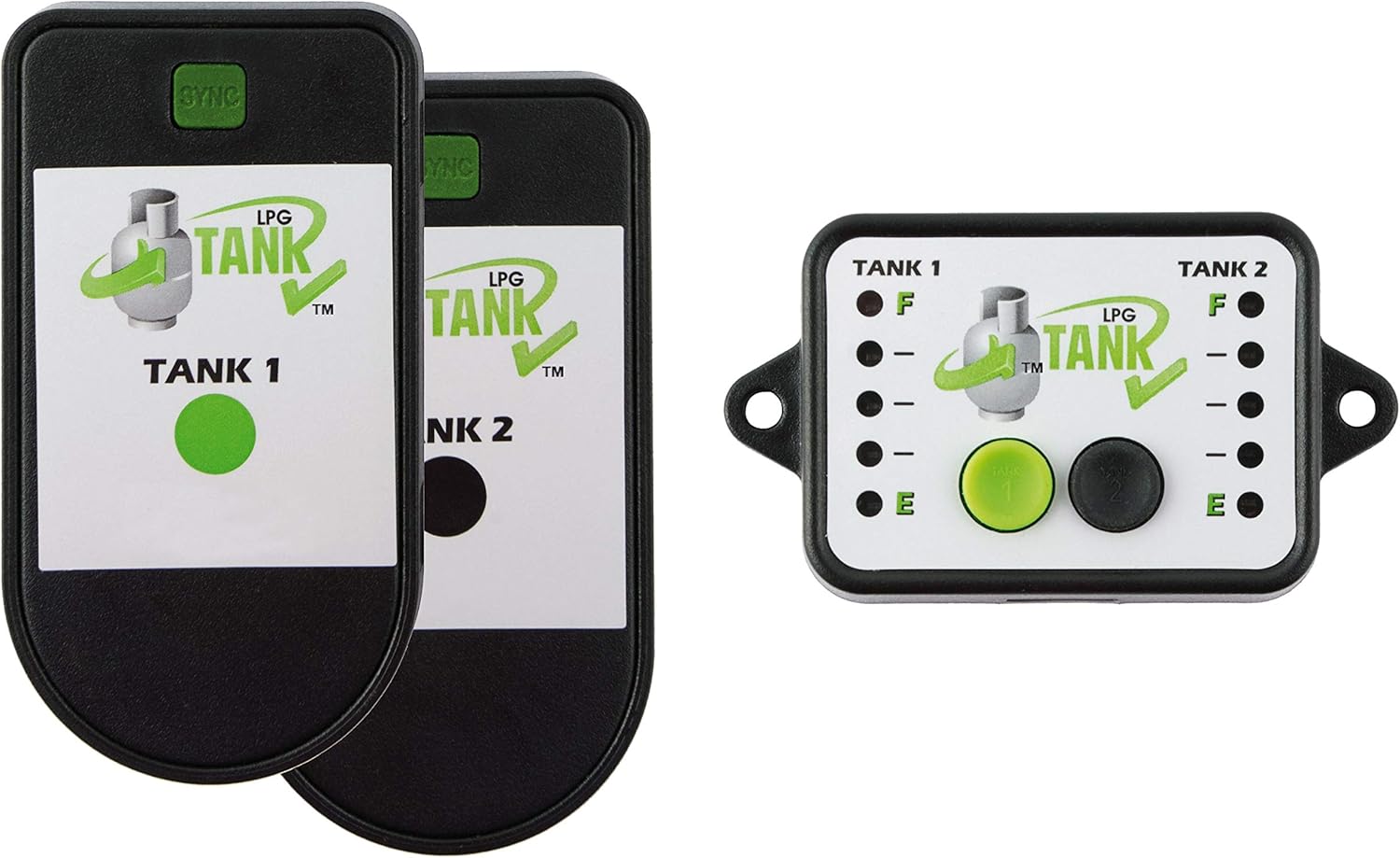
The second and more convenient device to use is a wireless system called Tank Check Dual. The system is genius. It has two wireless transmitters that magnetically stick to the bottom of each propane tank. The sensors send a signal into the tank and it measures the level of the liquid propane in the tank. The measurements are then sent via a Bluetooth signal back to a battery operated receiver that can be mounted just about anywhere. The level meter alone makes the system worth every penny, but what is cool is they also have an App that lets you read the level of each tank from a smartphone. It is very nice to know how much propane you are using at any given time and if you are going to make it through the night on a tank.